Contact
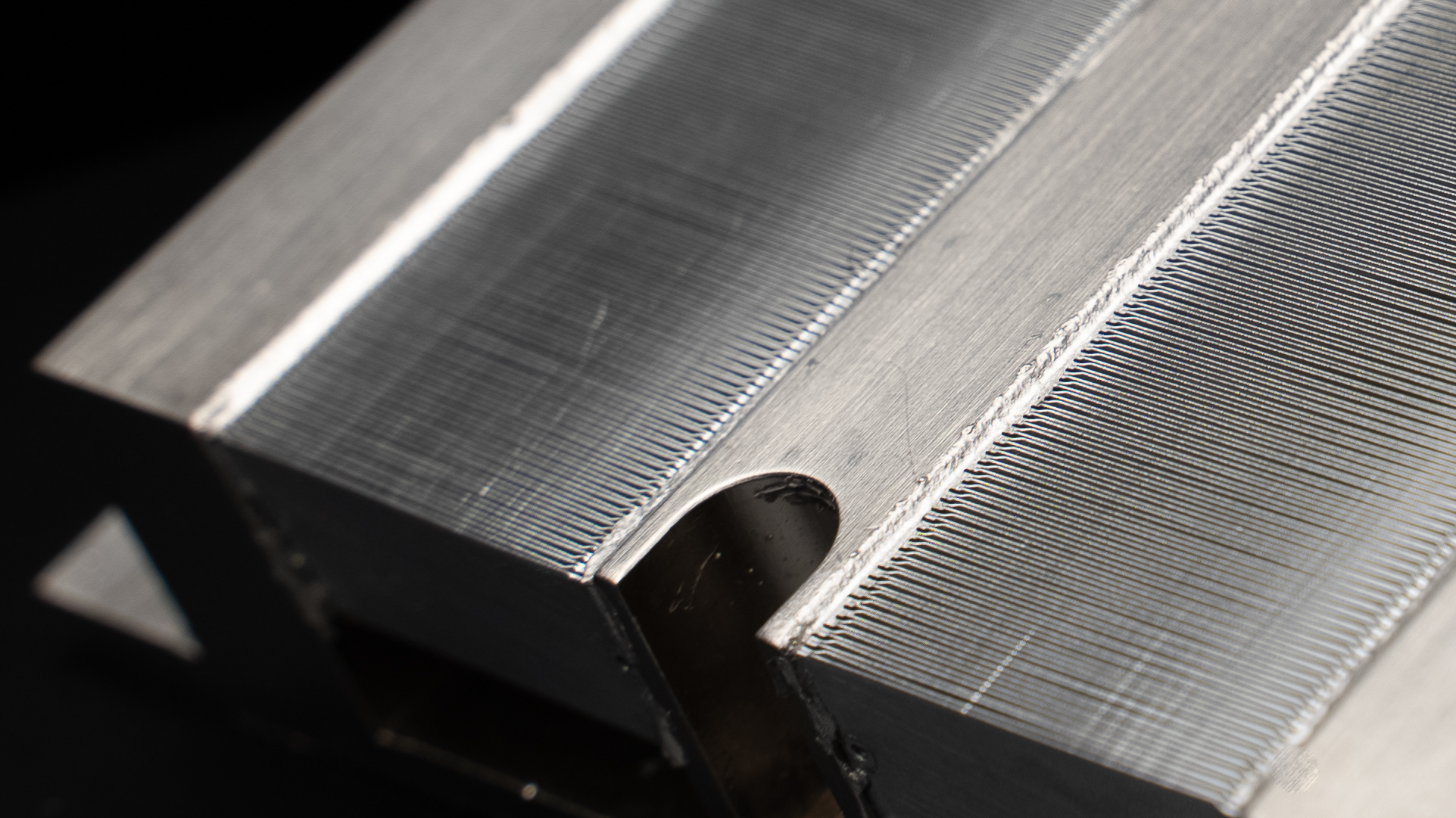
Macro of the JouleForce microchannel array
The technology · How JouleForce works

Different physics,
not just a bigger heat sink.

Conventional air cooling moves heat by pushing more air over more fin area. JouleForce changes the interaction itself, using airflow through patented microchannel arrays to extract heat inside the channel, at the wall. JouleForce is unimpaired by boundary layer formation that is the limiting factor of conventional air cooling.

Shown above: the microchannel array at macro scale, the surface where the physics happens.

The principle

It's not about more airflow. It's about where the air works.

A conventional heat sink relies on boundary-layer-laden bulk airflow sweeping across fin surfaces. As chip power climbs, the only levers are more fin area, more air, and more noise. JouleForce works differently.

Conventional · bulk flow
01

Air passes over the surface

Heat transfers only where moving air contacts the fin. A boundary layer of slow, near-wall air limits how much heat actually leaves the surface.

The boundary layer caps heat transfer
JouleForce · geometrically-controlled airflow
02

Geometry transforms the interaction at the surface

Heat transfers along the full length of each channel wall. The geometry diminishes the boundary layer, permitting more air to come into direct contact with the heated channel walls, so more heat leaves with less airflow. 

GEOMETRY DRIVES THE HEAT TRANSFER
How it works

Four steps, one continuous mechanism.

1

Provide the flow

A fan or blower draws air through the microchannel array by maintaining a pressure differential through the device. Airflow is required, but at a fraction of the volume conventional cooling demands. 

2

Channel it through

The microchannel array is mounted to a thermal interface, such as a vapor chamber, that transfers heat from the device being cooled directly into the microchannel surfaces. 

3

Extract at the wall

Geometry-driven molecular collisions extract heat from the microchannel walls more effectively than classical fluid dynamics predicts. The boundary layer that limits conventional air cooling never fully forms, keeping the heat exchange mechanism active along the entire microchannel length, and allowing the air to absorb more heat. 

4

Carry it away

The warmed air exits through a guided exhaust path and the cycle repeats, sustaining low chip temperatures under constant load with less airflow than conventional cooling requires. 

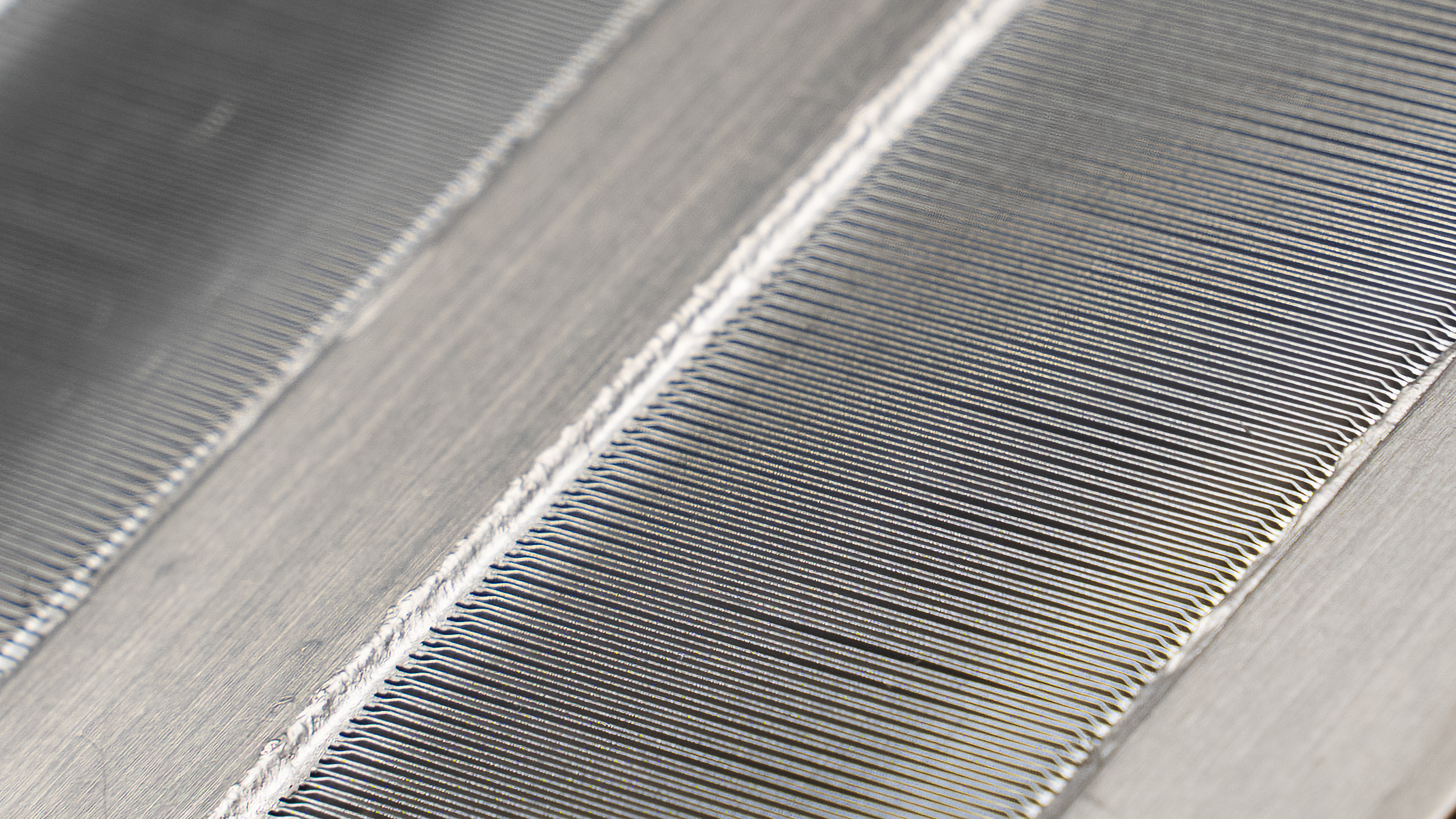
Close-up macro of the JouleForce microchannel geometry JFA · microchannel detail
Channel walls
Microchannel geometry where heat extraction occurs.
Induced-flow path
Air is drawn through each microchannel independently.
Inside the geometry

The advantage is built in, not bolted on.

The performance comes from the array geometry itself: the channel dimensions, spacing and flow path. This is what allows JouleForce to increase heat removal without relying primarily on more airflow or larger conventional fins.

Live from the field

Stable performance in continuous field operation.

24hrs, 7 days a week, everyday of the year. A JouleForce-cooled edge system operates continuously in Phoenix, Arizona, using only outside air to cool the electronics. CPU temperatures remain within a tight band as inlet conditions change, with no recorded throttling events during the representative period shown. 

CPU & inlet temperature vs. time
Edge node · 24h sustained load · 5-minute samples · °C
CPU Core 1 CPU Core 2 Inlet A Inlet B
≤ 87°C
Peak CPU, sustained
~43°C
Inlet air, steady
±2°C
CPU band over 24h
0
Throttle events

Representative field telemetry from a JouleForce edge deployment. Full test conditions and logs available under NDA.

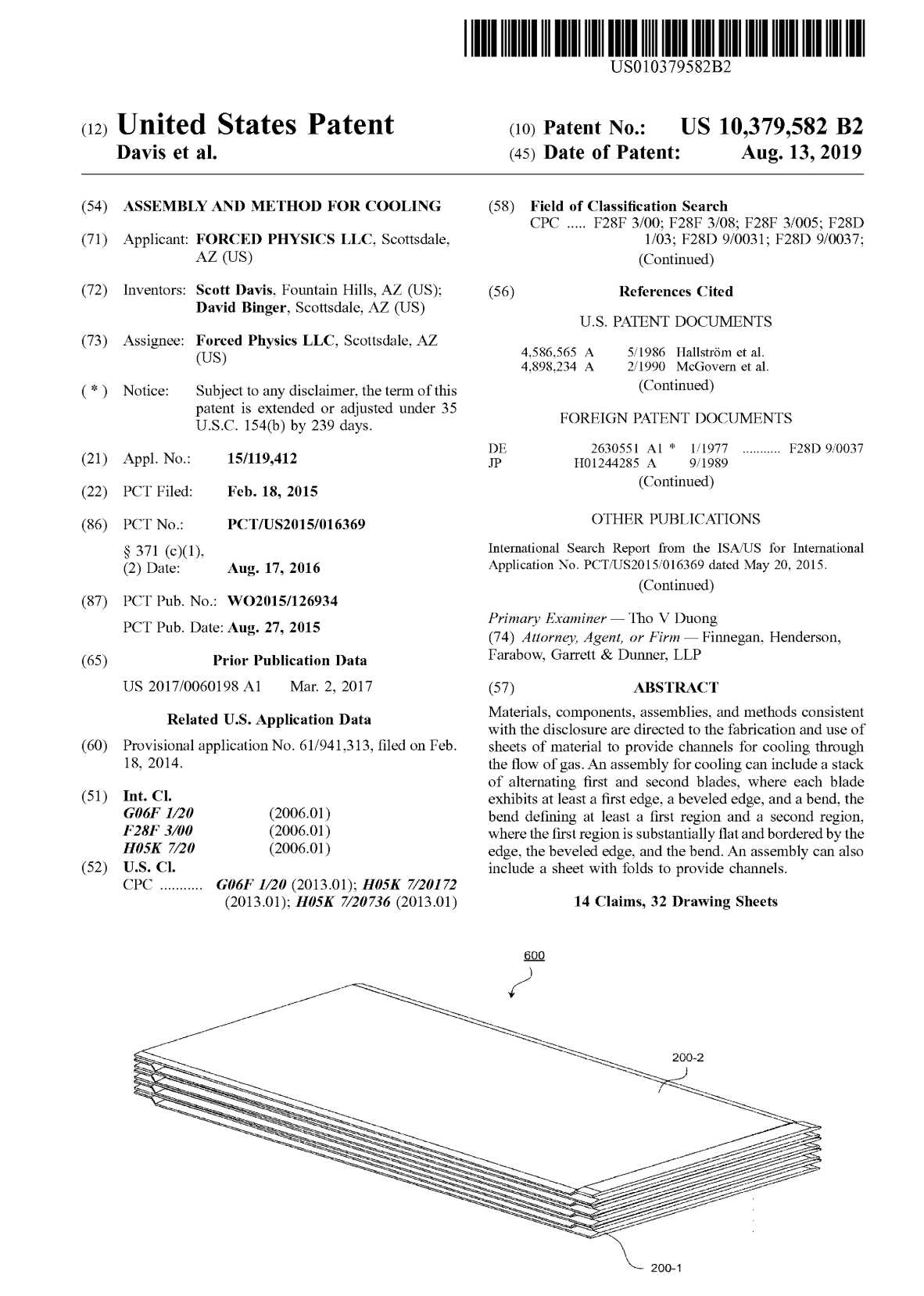
United States Patent US 10,379,582 B2, Assembly and Method for Cooling, Forced Physics LLC
US 10,379,582 B2Issued Aug 13, 2019
Protected by design

The core architecture is protected by a global patent portfolio.

The core array geometry and its implementation are protected by an issued patent portfolio. That matters because the advantage is not a manufacturing trick that can be copied, it is the geometry itself, and the geometry is owned.

U.S. Patent 10,379,582 B2 · “Assembly and Method for Cooling” · 14 claims, 32 drawing sheets · Forced Physics LLC.

Technical resources

Review the evidence and engineering.

Independent SP5 Technical Evaluation

Dr. Alfonso Ortega, Villanova University

Independent reproduction of Forced Physics' SP5 thermal-resistance and pressure-drop measurements, with comparison to conventional air cooling.

Download the independent evaluation

JouleForce Engineering Whitepaper

A deeper explanation of the microchannel architecture, heat-transfer mechanism, test methodology, and design implications.

Download the engineering whitepaper