Contact
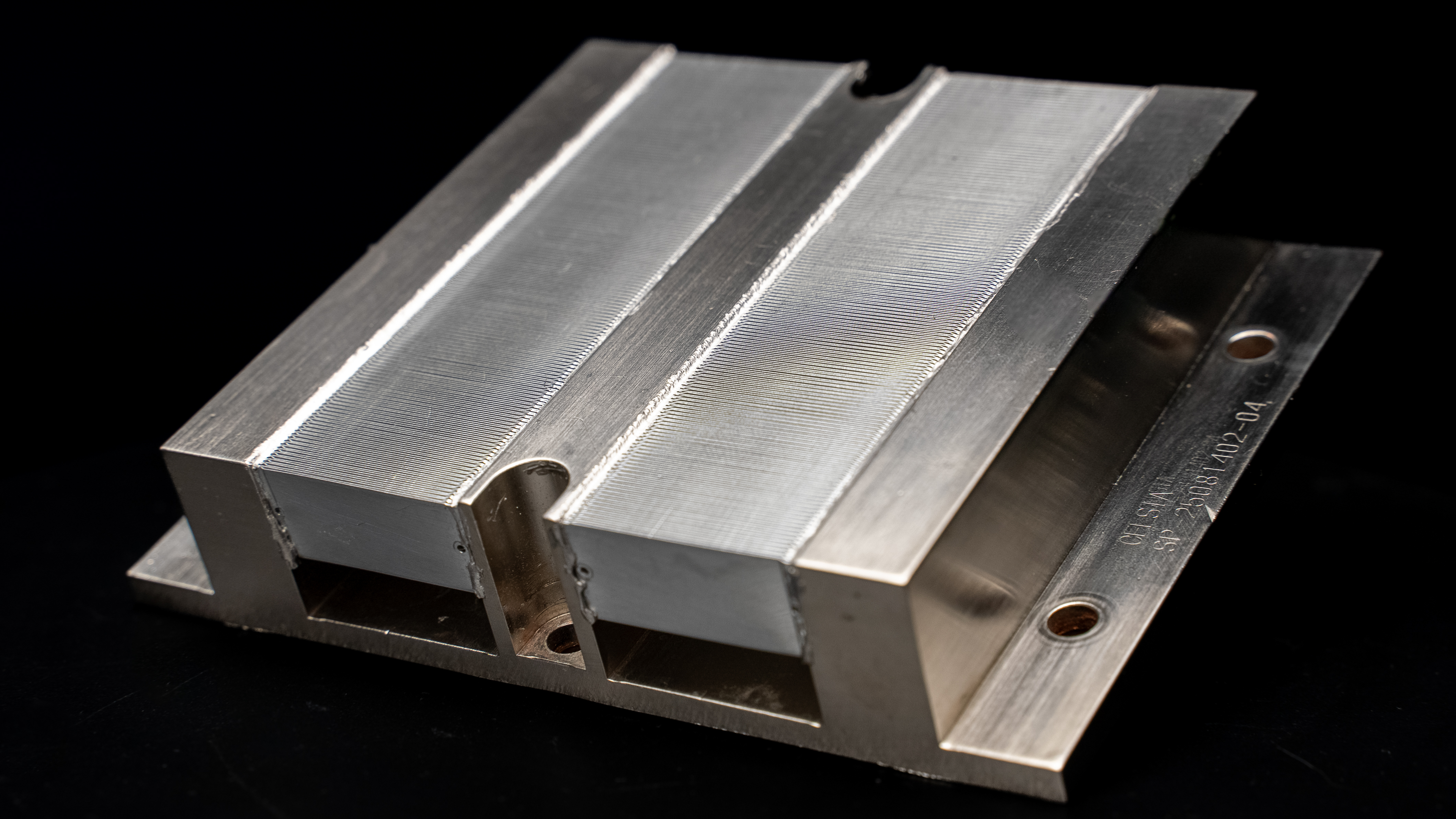
JouleForce cooler
Solutions · Where JouleForce deploys

Higher density,
without bringing water to the rack.

For the teams hitting the limits of conventional air, but hesitant to take on the capital, retrofit, and leak risk of liquid, JouleForce is the third path. The same power density, without the liquid, mapped to your needs and your environment.

Facility water
Not introduced
Retrofit cycle
Short, rack-level
Leak risk
None
Density headroom
High & rising
Where it fits

Built for the places liquid can't easily go.

The constraint is rarely the chip alone, it's the building, the service model, and the risk tolerance around it. JouleForce maps to the environments where those constraints bite hardest.

Hyperscale & AI

AI training & inference racks

Accelerator power is climbing past the practical ceiling of conventional air. JouleForce lifts the density ceiling while keeping the operational model air-simple.

Best for 700–1,200 W+ accelerators
Enterprise & colo

Existing data centers

Raise rack density inside facilities that were never plumbed for liquid, without adding CDUs, manifolds, or rack-level coolant plumbing.

Best for Air-cooled retrofits
OEM & ODM

Server platform builders

An air-based alternative to in-chassis liquid loops that integrates with server platforms, without designing coolant routing into the product.

Best for Chassis integration
Edge & remote

Constrained & field sites

High-density cooling where liquid service infrastructure is impractical, remote sites, sealed enclosures, and environments without a coolant service path.

Best for No-service deployments
The problem we remove

The cost of going liquid isn't just the coolant.

When conventional air runs out of headroom, liquid cooling becomes a facility-level project. JouleForce creates a path to higher density without adding rack-level liquid infrastructure.

Attribute
Traditional Air
Liquid Cooling
JouleForce
Heat-load ceiling
~350–400 W
Very high
Very high & rising
Facility plumbing
None
CDUs, manifolds, hoses
None
Water / leak risk
None
Present
None
Retrofit cycle
Short
Long, facility-level
Short
Service complexity
Low
High
Low
Density headroom
Limited
High
High

Traditional Air

Heat ceiling~350–400 W
PlumbingNone
Leak riskNone
DensityLimited

Liquid Cooling

Heat ceilingVery high
PlumbingCDUs, manifolds
Leak riskPresent
DensityHigh

JouleForce

Heat ceilingHigh & rising
PlumbingNone
Leak riskNone
DensityHigh
Deployment models

Three deployment paths.

JouleForce can be adapted for existing facilities, new builds, and sites with limited service infrastructure.

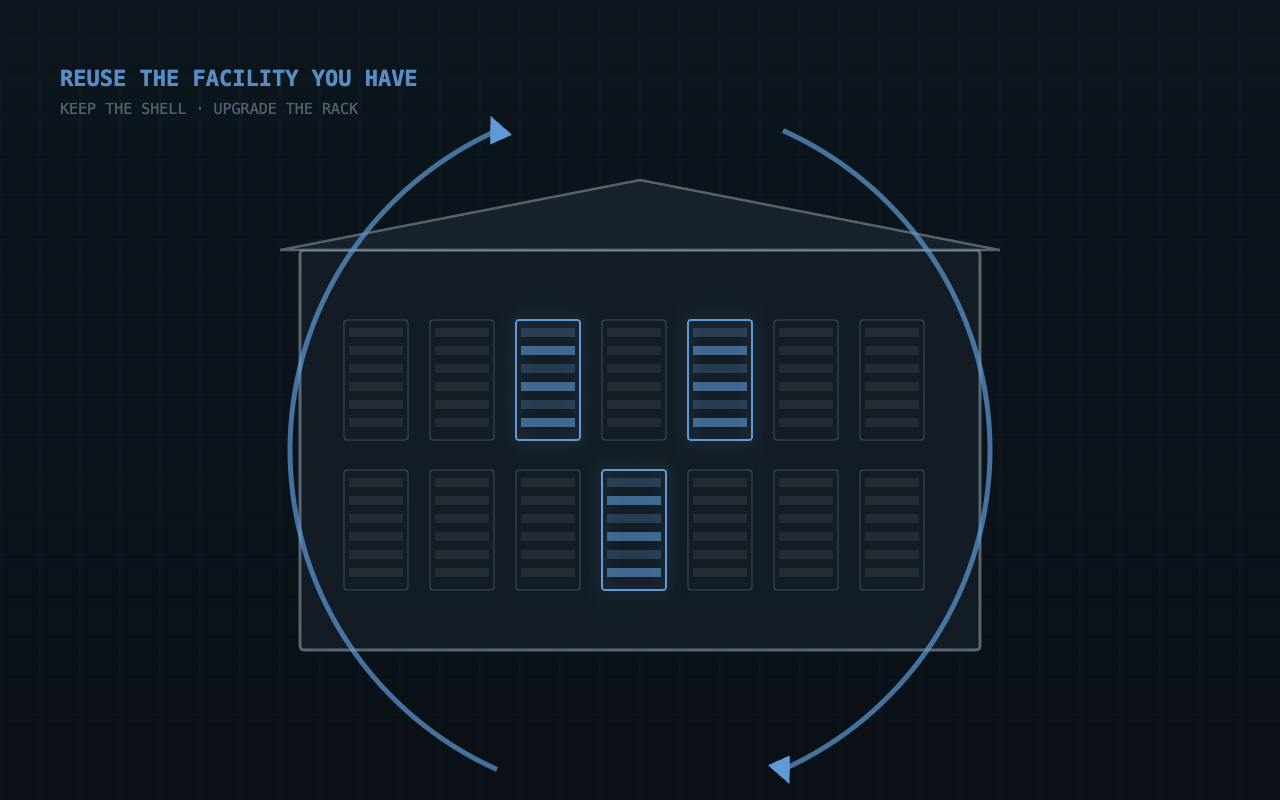
Retrofit: reuse the existing facility shell, upgrading racks in placeRetrofit

Drop into existing racks

Raise density in air-cooled facilities without a facility-water project. Rack-level changes, familiar service model, short cycle.

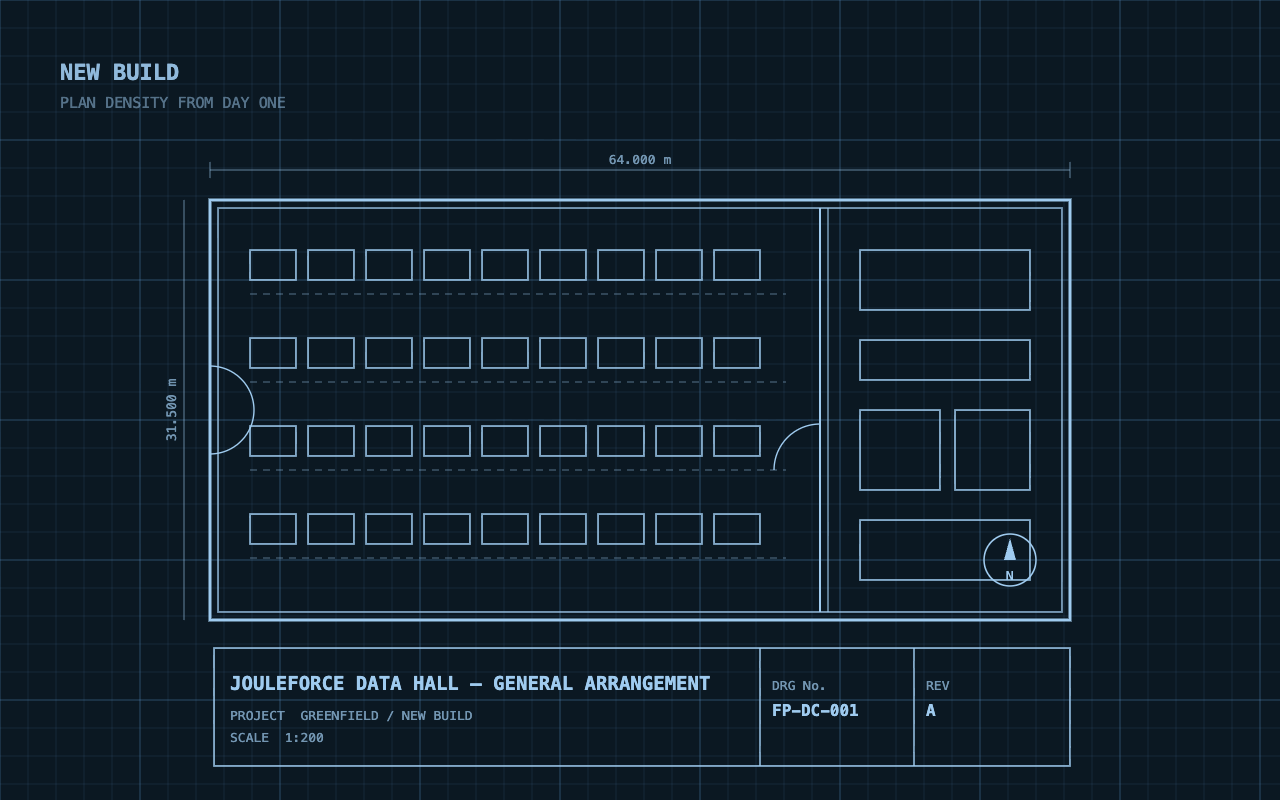
Greenfield: architectural blueprint of a new data hall with density designed in from day oneGreenfield

Design density in from day one

Plan higher rack density into a new build while avoiding the capital and complexity of facility-wide liquid distribution.

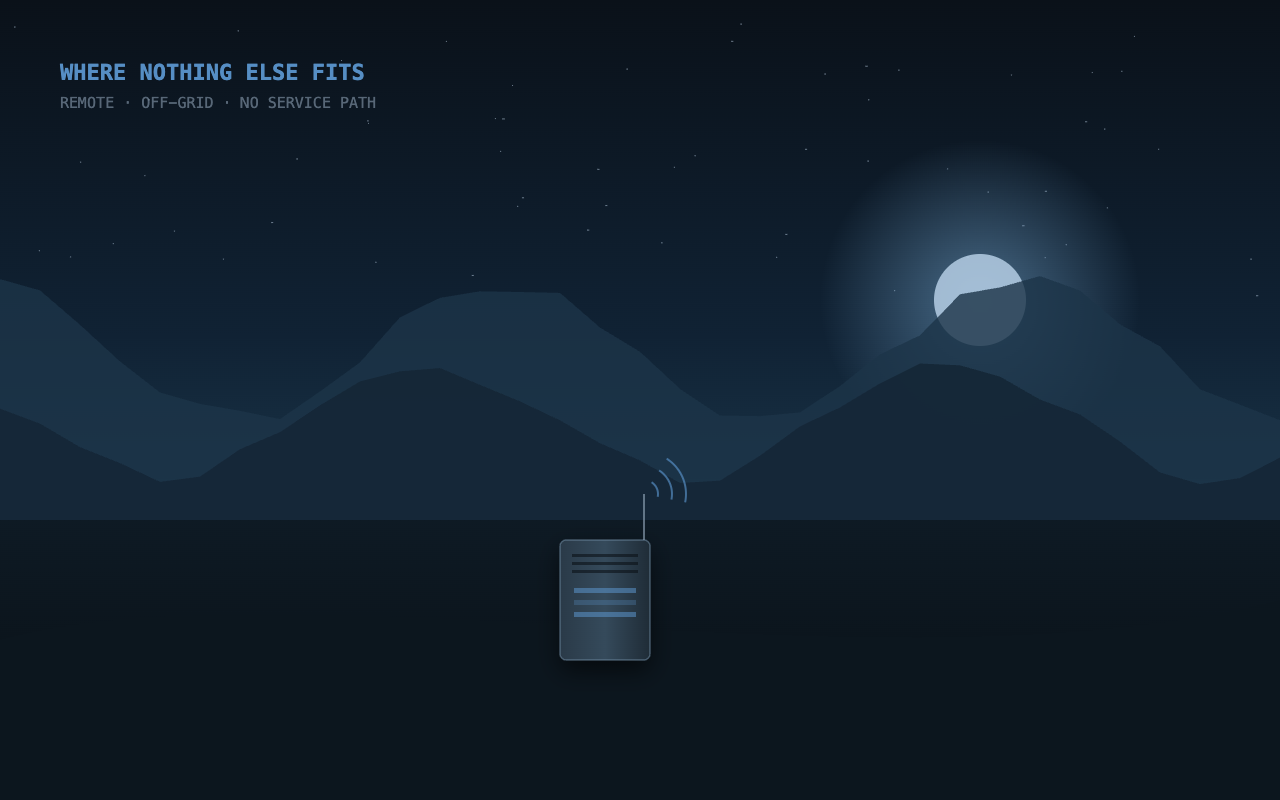
Edge: a lone sealed enclosure in a remote off-grid landscape with no supporting infrastructureEdge

Deploy where there's no service path

Bring high-density compute to remote and constrained sites that can't support coolant loops or routine liquid service.

What each team gets

One decision, value across the table.

A cooling choice touches operations, facilities, finance, and sustainability. The air-based model gives each of them something to say yes to.

Operations

Density & uptime

  • Higher rack density without a new risk class
  • No coolant in the path above live compute
  • Familiar air-cooled service model
Facilities

No water project

  • No CDUs, manifolds, or hoses to install
  • No facility water brought to the white space
  • Short, rack-level retrofit cycle
Finance

Capital avoided

  • Avoids facility-wide liquid distribution capital
  • Density gains on the existing footprint
  • Shorter cycle to deployed capacity
Sustainability

Resource profile

  • Air-based, no water introduced to cool
  • Lower airflow than the conventional reference
  • Extends the life of air-cooled infrastructure