
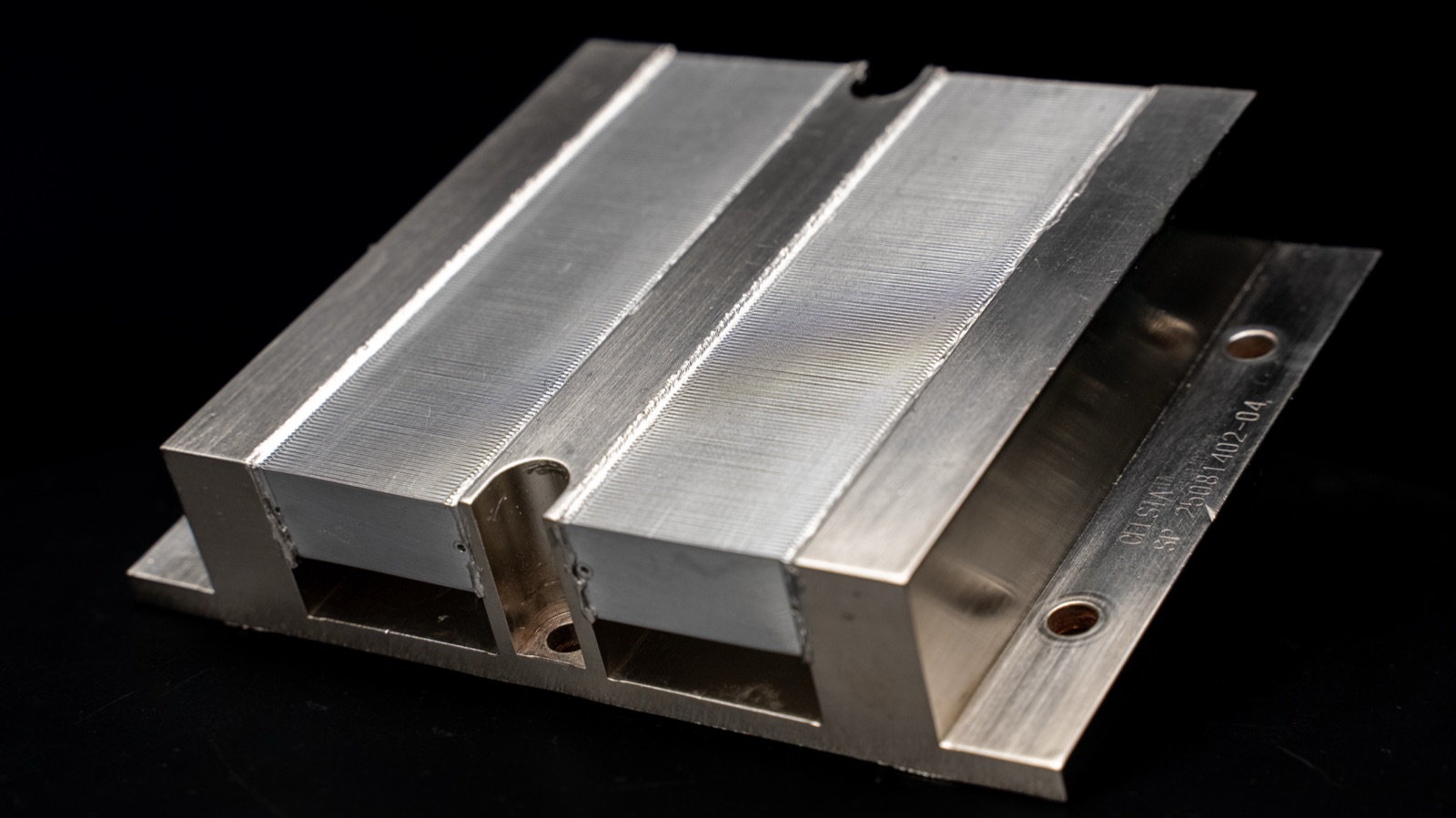
Dr. Alfonso Ortega, who heads the Laboratory for Advanced Thermal and Fluid Systems at Villanova University, independently evaluated the JouleForce™ SP5 cooler. He reproduced our thermal resistance and pressure drop measurements within 3 to 5 percent, then reviewed our laboratory data comparing the cooler against a conventional 1U Dell reference heat sink.
In that data, thermal resistance came in 50 percent lower than the reference heat sink, and that was achieved at roughly one third of the airflow.
“This effectively extends the practical limits and lifecycle of air-cooling technologies.”Dr. Alfonso Ortega, Villanova University
The airflow number is noteworthy. Conventional air cooling scales by pushing more air across more fin area, which requires fan power and acoustic headroom and eventually stops working altogether. JouleForce removes more heat with less air, because the heat transfer happens inside the channel rather than across a fin face.
The full evaluation is published rather than summarized. If high-power thermal design is part of your work, we would rather you read the methodology than take our word for the headline.